
Delta Tocotrienol and the Annatto Form: What the Label Is Actually Telling You
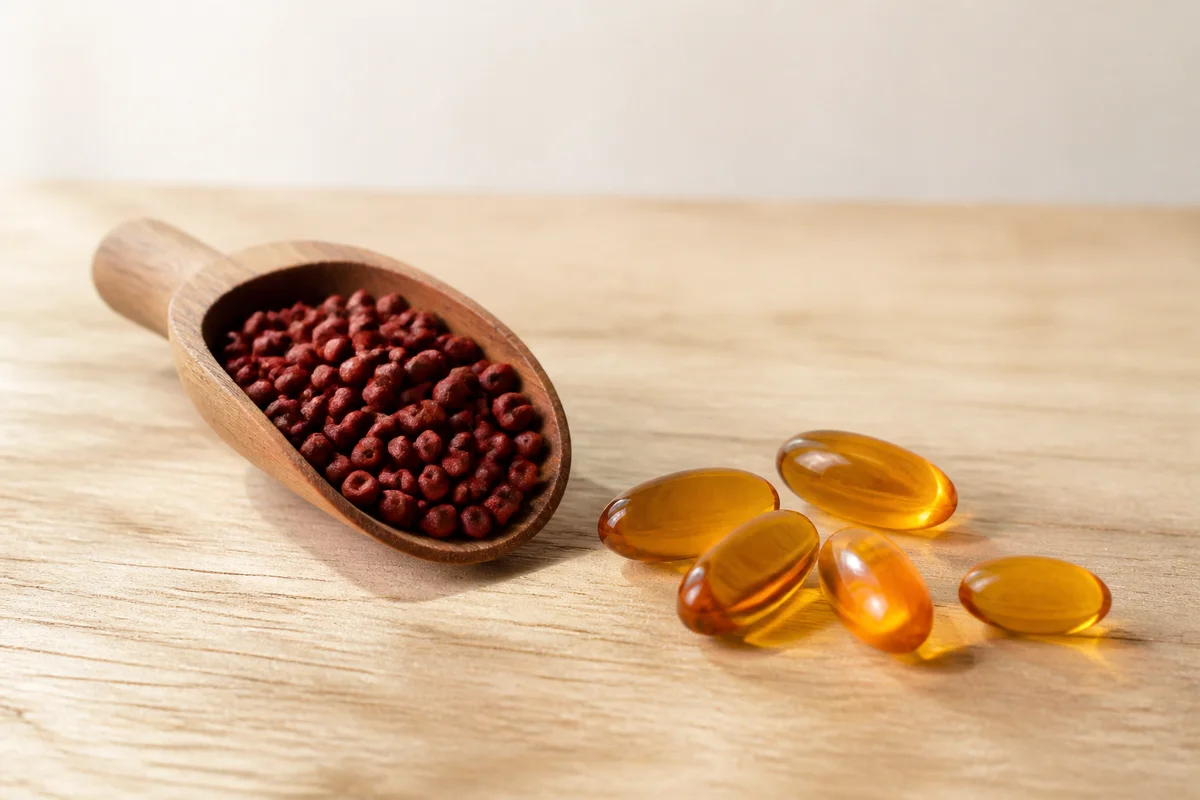
Delta tocotrienol is one of the four tocotrienol isomers, annatto is the plant it is commonly extracted from, and DeltaGold is a branded annatto concentrate. Annatto matters because it is the only known natural source that is essentially tocopherol-free, and its tocotrienols run roughly 90% delta and 10% gamma.
If you have gone looking for tocotrienols you have run into three terms that get used almost interchangeably and mean quite different things: delta tocotrienol, annatto tocotrienol, and DeltaGold.
They are not synonyms. One is a molecule, one is a botanical source, and one is a specific commercial ingredient. Sorting them out makes the labels legible.
Delta is an isomer
Tocotrienols come in four forms, alpha, beta, gamma and delta, which differ only in how many methyl groups sit on the chromanol ring and where.
Alpha has three. Delta has one. That is the whole distinction, and it changes how the molecule behaves: fewer methyl groups leave the ring less crowded, which affects how it packs into a membrane and how readily it participates in the antioxidant chemistry.
Of the four, delta and gamma are the isomers most of the tocotrienol research has concentrated on, with delta drawing the most recent attention. Alpha tocotrienol, despite sharing a prefix with the famous tocopherol, is not the star of this branch.
So "delta tocotrienol" on a label is telling you which of the four you are getting. That is useful information, and most products that bother to print it are signalling they know the difference.
Annatto is a source, and an unusual one
Tocotrienols are commercially extracted from three plants, and the choice matters for a reason that has nothing to do with the tocotrienols themselves.
Palm and rice bran both yield tocotrienols, but both also contain substantial tocopherols, roughly 25% and 50% respectively. That is a problem, because alpha-tocopherol competes with tocotrienols for absorption. A palm-derived product either carries that competitor along or has to strip it out in processing.
Annatto: the seed of Bixa orellana, the South American shrub whose pigment colours cheddar and butter, is the exception. It is the only known natural source that is essentially tocopherol-free, and its tocotrienol profile runs roughly 90% delta and 10% gamma: heavily weighted toward exactly the isomers of interest.
That is the whole case for annatto. Not that its delta tocotrienol is different from anyone else's, the molecule is the molecule, but that it arrives without the compound that would compete with it, and already concentrated in the right isomer. Nothing has to be removed.
DeltaGold is a specific ingredient
DeltaGold® is an annatto tocotrienol concentrate, developed out of the work of Dr. Barrie Tan, the researcher most associated with identifying annatto as a tocopherol-free source.
It is a branded, traceable raw material. That matters for the same reason named extracts matter anywhere: you can tie it to a specific manufacturer, a specific specification, and the published work done on that material, as opposed to "tocotrienol complex," which tells you nothing about isomer ratio, source, or tocopherol content.
So the three terms nest: DeltaGold is a branded concentrate of annatto tocotrienols, which are predominantly the delta isomer.
Reading a tocotrienol label
Four things worth checking, in order:
- Source named? Annatto, palm, or rice bran. If it is not stated, assume the cheaper source and the tocopherols that come with it.
- Tocopherol-free, stated explicitly? This is the specification that determines whether the tocotrienols have a clear run at absorption.
- Isomer ratio given? "90% delta / 10% gamma" tells you what you are getting. "Tocotrienol complex" does not.
- Milligrams of tocotrienols, or of the oil they are in? These are different numbers, and only the first is meaningful. A large figure with no concentration stated usually refers to total oil.
One practical note that applies to the whole vitamin E family: these are fat-soluble, so absorption is better alongside a meal containing some fat. Taking them on an empty stomach works against you.
What it is for: and what it is not
Tocotrienols are taken for antioxidant support and everyday cardiovascular support. The proposed reason they behave differently from tocopherols is the unsaturated tail described in tocotrienols vs. tocopherols, more mobile within a membrane, better distributed through the fatty tissue it is protecting.
They are not a treatment for any disease, and no supplement may be sold as one. This is a corner of the market with more enthusiasm than settled evidence, and the honest framing is that tocotrienols are a real and under-studied branch of a familiar vitamin, not a breakthrough with proven outcomes. Anyone telling you otherwise has gone past what is known.
What we make
Delta-E Tocotrienols delivers 125 mg of DeltaGold® per small softgel, annatto-derived, deliberately tocopherol-free, at the natural 90% delta / 10% gamma ratio, gently processed.
It is built to be the part of the vitamin E family your multivitamin almost certainly omits, for everyday cardiovascular and antioxidant support. One ingredient, named on the panel, at a stated dose, which is the same thing we would tell you to look for on anyone else's bottle.
These statements have not been evaluated by the Food and Drug Administration. This product is not intended to diagnose, treat, cure, or prevent any disease.